
WINNING THE ASHES IN 2005: A GAME CHANGER FOR SCHOOLS
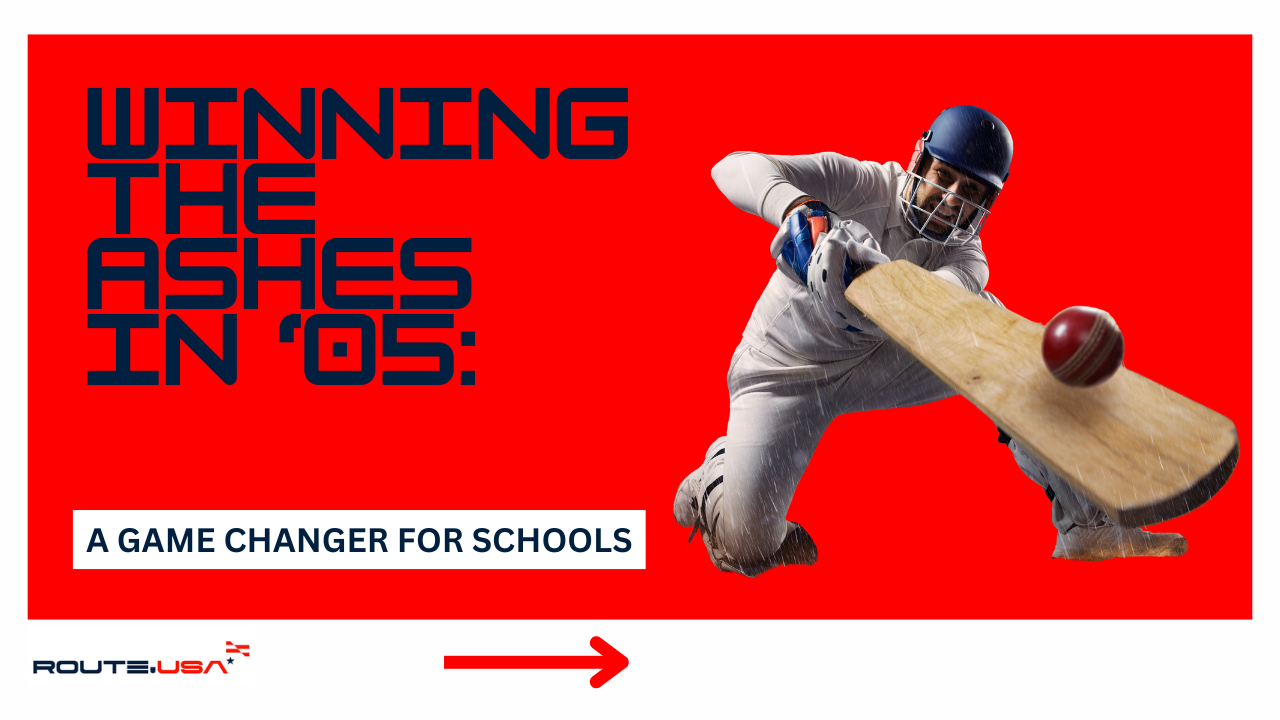
Summer 2005. I wasn't even a cricket fan, but living in London and suddenly I'm in pubs at random hours, learning what LBW means, watching with people I'd never talked to before, feeling an entire city unite around something pure. I remember 2005 as "the cricket summer," not "Blair's third term."
I remember 1991 from a Nirvana tape a friend gifted me. Not the Soviet Union collapsing, the Gulf War kicking off, the World Wide Web launching.
1996 and THAT Gazza goal against Scotland (pretty sure Colin Hendry also remembers it…), and that Karel Poborsky lob/flick over Portugal’s Vitor Baia.
Massive historical events that textbooks call defining moments of the modern era. But what do I actually remember? Goals, tapes, hugs, songs... That's not accidental. That's how human memory actually works.
Here's my point: we don't remember history the way textbooks teach it. We remember it through the moments that made us feel something. This isn't shallow. This is how humans actually process and remember the world.
When you EXPERIENCE something with other people, your brain doesn't just store information. It stores the pub atmosphere, the conversations with strangers, the collective intake of breath when Flintoff bowls, the euphoria when England wins. Most world events happen TO you. Cultural moments happen WITH you. Your brain treats them completely differently.
And, critically, every generation has its game changers. The pattern repeats across every decade because it's not about the events themselves. It's about how they hit us during the years when we're forming who we are. Here's the key: they hit us when we're choosing our tribes, forming our identities, deciding what matters to us. Political events hit us when we're supposed to be responsible citizens processing information.
Sport isn't just entertainment. It's inherited tribal identity passed down through generations. Your music isn't just sound. It's the soundtrack to figuring out who you are during the most crucial years of your life.
Understanding how humans actually process and remember history isn't academic. It's practical.
If you want people to remember your message, your brand, your movement, you need to create experiences, not information. You need to give people something to participate in, not something to analyze. You need to tap into identity formation, not just intellectual agreement.
Education is no different: The most successful leaders understand this instinctively. They create cultural moments that people choose to be part of. They help people make memories. They stick with you for the rest of your life, and the rest of your life... started at school.
Thirty years from now, what will your students remember from their school years? The biology lesson about photosynthesis? Or the goal they scored in the semi-final that sent their whole school into celebration? The geography test they passed? Or the moment their team lifted the trophy while their parents cheered from the stands?
Every school talks about developing well rounded students. About building character and resilience. About creating experiences beyond the classroom. But most miss the fundamental truth about how these qualities actually get built. It’s not in assemblies or through motivational posters. They get built in moments of pressure, triumph, defeat, and comeback. They get built when 15-year-olds discover they're capable of more than they thought. When they experience what it means to represent something bigger than themselves.
We create the moments and pathways that become the stories they'll tell their grandchildren. Forever, starts here.